
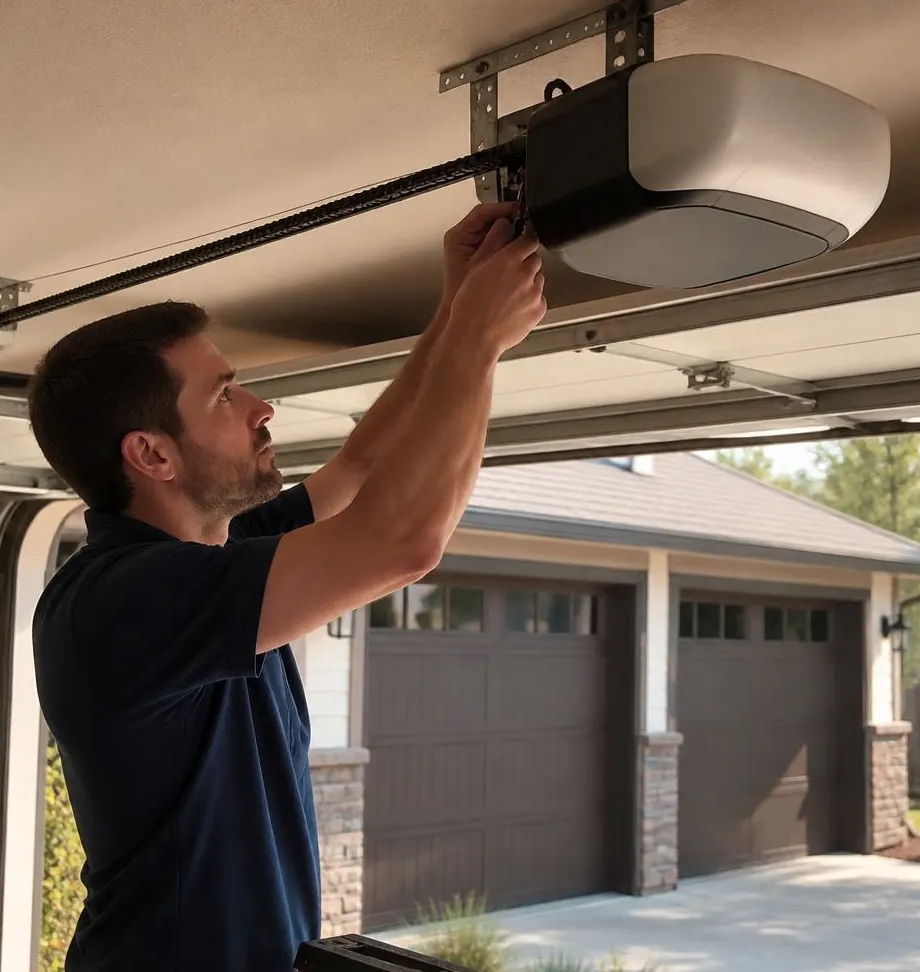
The Call That Starts With "It's Fine, It's Always Done That"
A technician gets this service call a lot in this area: one spouse says the garage door has always closed with a little bounce at the bottom, the other swears it just started slamming down harder than it used to. Both are half right. What they're actually arguing about, without knowing it, is the force setting and the travel limits on the opener — two adjustments most homeowners never touch until something starts grinding, reversing, or crashing shut.
Travel Limits: Where the Door Is Told to Stop
Travel limits tell the opener exactly how far to run the door in each direction — the point where "fully open" is and the point where "fully closed" is. Set these wrong and you get obvious symptoms: the door stops a few inches short of the floor and leaves a gap, or it keeps grinding upward and bangs into the header before the opener cuts power. Either way, the door isn't actually seating where it should, which matters more than it sounds like.
A door that doesn't fully close leaves a gap along the bottom seal. During heavy rain or a coastal storm remnant blowing through, that gap is an invitation for water to pool against the threshold. In icy winter weather, that same gap lets cold air stream into the garage, which is a real problem if the garage shares a wall with living space, as it does in a lot of the newer construction around here.
Force Settings: How Hard the Opener Is Allowed to Push
Force settings control how much resistance the opener will fight through before it decides something is wrong and reverses. This is a safety feature, not a convenience setting — it's what's supposed to stop the door before it crushes a trash can, a pet, or a kid's bike that got left in the track.
When force is set too low, the door reverses constantly, even when nothing is actually in the way. Cold, stiff tracks in January can create just enough extra resistance to trip a low force setting, which is why some doors suddenly start "refusing" to close every winter.
When force is set too high, the opener muscles through resistance it shouldn't. This is the dangerous direction. A door with force cranked up too far can close on an object without reversing, can keep driving against a bent track or a misaligned roller, and can put ongoing strain on the springs, cables, and the opener's gear assembly. Over months, that strain shows up as a motor that works harder than it should, a chain or belt that stretches early, or a spring that fails sooner than its expected lifespan.
Signs the Settings Are Off, Not Just "the Door Being Old"
- Door reverses before touching the floor, with nothing blocking it
- Door closes hard enough to bounce or shake the frame
- Door hesitates or struggles partway through its travel
- Gap under the door when fully closed
- Opener motor runs noticeably longer or louder than it used to
Why This Area's Weather Makes It Worse
Garage doors in Haymarket deal with real seasonal swings — humid summers that can swell wood doors and door-adjacent framing, and icy winters that stiffen tracks and tighten metal components. A force setting dialed in during a mild October can be noticeably wrong by February, and settings that work fine in winter can feel too aggressive once summer humidity changes how smoothly the door glides. This is especially true in older homes with original hardware, where the opener's force dial may have drifted on its own over years of use, versus newer installs where digital settings hold steadier but still need recalibration after any spring or track work.
Spring tension and opener force are also connected in a way that trips people up: if the springs are even slightly out of adjustment, the opener compensates by working harder, which can mask a spring problem until it fails outright, usually at an inconvenient time.
When to Call Haymarket Garage Door
If you've adjusted the force and travel settings on the opener itself and the door still reverses randomly, still slams, or still won't seat flush, stop adjusting and call. That combination usually points to something mechanical — worn rollers, a bent track, or springs that need rebalancing — rather than a setting that just needs tweaking. Haymarket Garage Door handles both garage door opener repair and installation and spring replacement, and part of either job is recalibrating force and travel limits so the door and opener are actually working together instead of fighting each other.
If your door has been doing something unusual for more than a season, it's worth a proper look before cold weather locks the problem in place. Call Haymarket Garage Door to get it checked and settled, so the only thing left to argue about is whose turn it is to take out the trash.